
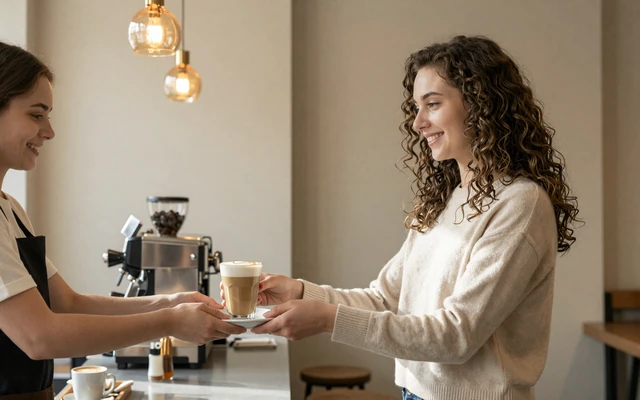
Independent Coffee Shops
Saturday and Sunday mornings between 9 and 11 - the highest concentration of unrushed, approachable singles in any neighborhood. Order, sit near the bar, ask what they're reading.
Local flirting didn't die - it just moved. Coffee shops, run clubs, and bookstore listening rooms are quietly outperforming bars for first conversations, and the singles in your area are easier to find when you stop relying on chance alone. Here's the 2026 map of where, when, and how to meet someone real without leaving your zip code.
Meeting someone in your city used to be a numbers game played in bars. In 2026 it isn't, and pretending otherwise is why so many singles in their thirties feel stuck. A 2025 SSRS survey found that 39% of U.S. adults say they "no longer know where to meet someone in person," up from 22% in 2019. The drop wasn't because people stopped wanting offline connection - it's because the venues changed.
Here's what shifted. Bar culture compressed: noise levels stayed high, but the share of patrons who go out specifically to meet strangers fell to roughly one in eight, according to a 2024 Eventbrite trend report. Third places - coffee shops, libraries, parks, farmers markets - became where intentional singles actually spend weekend mornings. And recurring activities (run clubs, climbing gyms, hobby leagues) outperformed one-shot mixers because the same people show up week after week, which is what humans actually need to feel comfortable enough to flirt.
What does this mean in practice? If your dating playbook still revolves around Friday nights at a busy bar, you're hunting in a thinned-out forest. The singles in your area are still around - they're just somewhere quieter, earlier in the day, doing something they'd be doing anyway.
The best place to meet a stranger is somewhere you'd already be on a Tuesday morning. Familiarity lowers the cost of saying hello.
Six categories, ranked by approachability and the realistic odds of an unforced first conversation. None require an outfit change.
Saturday and Sunday mornings between 9 and 11 - the highest concentration of unrushed, approachable singles in any neighborhood. Order, sit near the bar, ask what they're reading.
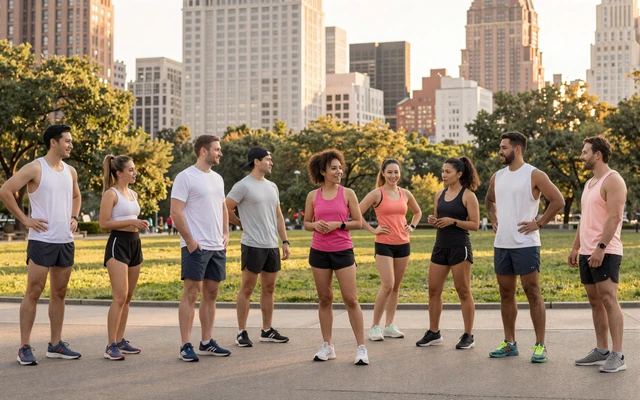
Recurring exposure is the cheat code. Showing up to the same Tuesday run club three weeks in a row beats three different bars every time - the awkward "are we strangers?" phase ends fast.
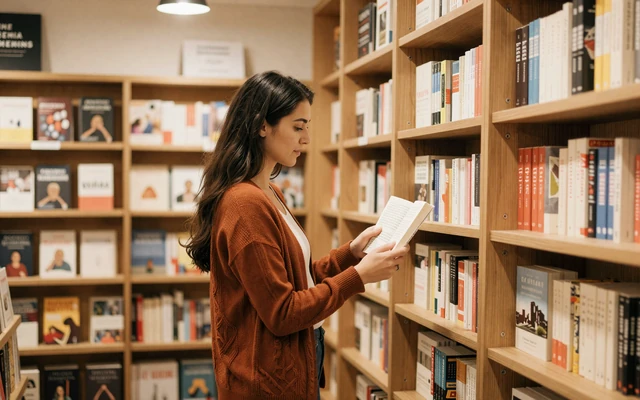
Author events, poetry nights, vinyl listening rooms - pre-filtered for shared interest and built-in conversation topics. Approach windows open between sets, never during.
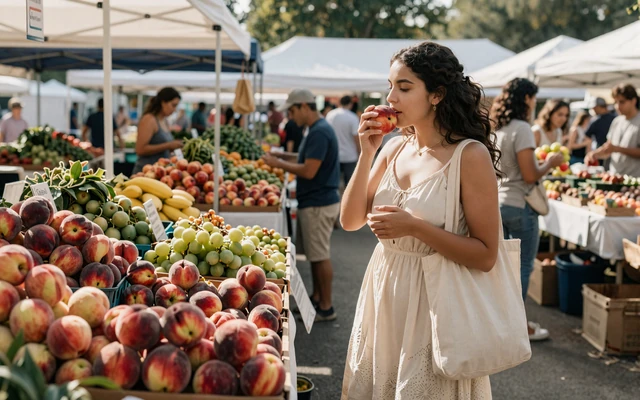
Daylight, hands occupied, easy openers about what someone's buying. Saturday mornings are the warm hours - everyone's relaxed, no one's rushing toward a meeting.
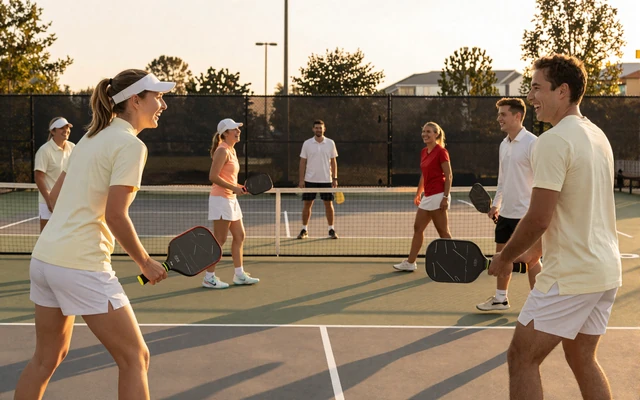
Mixed-doubles formats and partner rotations are the highest-conversion social sports of 2026. You're forced into low-stakes interaction every fifteen minutes for an hour straight.
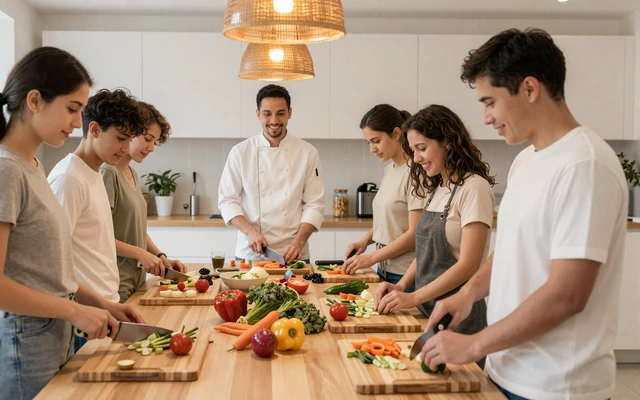
Cooking classes, pottery studios, language meetups - small group sizes (six to twelve) and shared tasks make conversation structurally inevitable. Two-hour format, low pressure.
The most expensive belief in modern dating is that you have to choose. You don't, and the singles in your area who are actually finding partners stopped picking sides around 2023. Here's the honest read on each lane.
In-person beats every screen on three things: instant chemistry signal, ambient context, and zero performance pressure. You learn more about someone in four minutes of standing next to them at a farmers market than you do from a forty-message exchange. Body language, tone, the way they treat the person making their coffee - none of that compresses into a profile. The trade-off is volume. You can spend three weeks at the same coffee shop and meet zero compatible people purely because the audience there isn't filtered for what you want.
Online dating's superpower is pre-filtering. A 2025 Pew study found that adults who use both online and offline approaches in tandem are 2.4x more likely to be in a relationship within a year than those using only one. The reason isn't mysterious - apps surface people you'd never bump into, and the better ones surface them by stated intent. The catch is that quality of the filter matters enormously, which is why niche platforms like our XL Local Dating hub outperform generalist apps for cross-cultural seekers in any given metro.
The bottom line: use offline for chemistry confirmation and online for audience expansion. Singles who treat them as separate strategies under-perform; singles who weave them together compound their odds. For more on which platforms genuinely convert, our breakdown of dating apps that actually work in 2026 walks through the math with current numbers.
Use the app to surface the person, use the venue to feel the chemistry. Four steps that turn a local dating platform into a social multiplier instead of a Saturday-night substitute.
Set your distance filter to a real walking or transit radius - fifteen minutes, not "anywhere in the metro." On XL Local Dating the proximity slider defaults to 10 miles, which is the sweet spot for actually meeting up within a week.
Suggest your regular coffee shop, the bookstore you hit on Saturdays, the run club you're already attending. Familiar territory cuts your nerves in half and gives you a graceful exit if chemistry isn't there.
Coffee, walk, market browse - anything that has a natural endpoint. Long first dates inflate expectations on both sides. Short first meets either lead to a longer second one or end cleanly with no awkwardness.
After three to five exchanged messages on the platform, suggest the meet. Endless texting kills momentum. The data is consistent across platforms - matches who meet within 7 days are 3x more likely to become a second date than matches who text for three weeks first.
The trick isn't a clever line - it's a comment about the shared environment. You're both in this place; that's already the opener. The phrasing just has to be observational and low-stakes enough that "no thanks" costs neither of you anything.
Notice none of them require wit. Local flirting in 2026 rewards being friendly and specific over being clever. If the response is short, you smile, say "fair enough," and go back to your day. No one loses.
The same logic applies online. When you match with someone on a local platform, reference something specific from their profile within your first message - a city, a hobby, a venue they mentioned. Generic openers underperform specific ones by roughly 4:1 on first-reply rates across niche platforms in 2026.
Curious how to read whether you're someone women would approach in the first place? Our deeper read on what women actually find attractive about men covers the research side. And if you're rebuilding your dating life after a stretch off the apps, the cost-vs-value math in is online dating worth it in 2026 is worth fifteen minutes of your time.
The fastest 2026 stack is two-track: pick a venue you already visit weekly (coffee shop, run club, bookstore, farmers market) and use a local-first dating platform with a tight proximity filter to surface people you wouldn't bump into otherwise. Adults who combine both approaches are 2.4x more likely to be in a relationship within twelve months than those using only one (Pew, 2025). Our XL Local Dating hub explains how the proximity matching works.
The 7-7-7 rule is a relationship maintenance heuristic: every seven days have a real conversation about how you're feeling, every seven weeks plan a proper date night, every seven months take a trip or do something significantly outside your routine together. It's aimed at couples already dating rather than people meeting for the first time, but it's a useful sanity check once you're three or four dates in.
Bookstores with author events, small cooking or pottery classes (six to twelve people), and recurring hobby groups where conversation is structurally embedded rather than mandatory. Avoid bars and large mixers - the energy cost is high and the conversion is low for introverts. Online platforms with thoughtful prompt-based profiles also let you do the chemistry work asynchronously, which usually fits introverted pacing better.
For finding people you can actually meet within a week, yes. Local-first or niche platforms typically default to tighter distance filters and verify profiles more aggressively, which raises the percentage of matches who are real, available, and within reach. Generalist apps optimize for swipe volume across a national user base, which is the opposite of what local dating needs.
Three quick signals: their phone is down or face-down, they're glancing around the room rather than locked into a screen or book, and they make brief eye contact when you walk past. Headphones in and eyes down is the universal "not now." Respect it. The point of local flirting in 2026 is low-cost, low-pressure - if the signals aren't green, move on without taking it personally.
Saturday and Sunday between 9am and noon. Weekend mornings cluster the highest density of unrushed, intentional adults across coffee shops, markets, parks, and group fitness. Tuesday and Wednesday evenings come second - recurring weekday classes and run clubs. Friday and Saturday nights, despite the cultural reputation, are now the worst windows for first conversations because the audience is mostly already grouped up.